Television themes, cassette tapes and an attic studio.
Richard's fascination with show sound began in the 1990s. He loved the scale and energy of television themes: the music, the timing and the feeling that every sound had a purpose. Those tunes were rarely available to buy, so he recorded them from television onto cassette tapes and replayed them upstairs in his own makeshift studio.
Long before JingleDeck had a name, the underlying idea was already there. A show changes when its music and effects arrive with confidence instead of hesitation.
Knowing what existing tools left behind
By the mid-2000s, Richard had tried several cartwall programs. They could play audio, but important controls were missing, the presentation felt basic and shaping a sound for the moment took more work than it should.
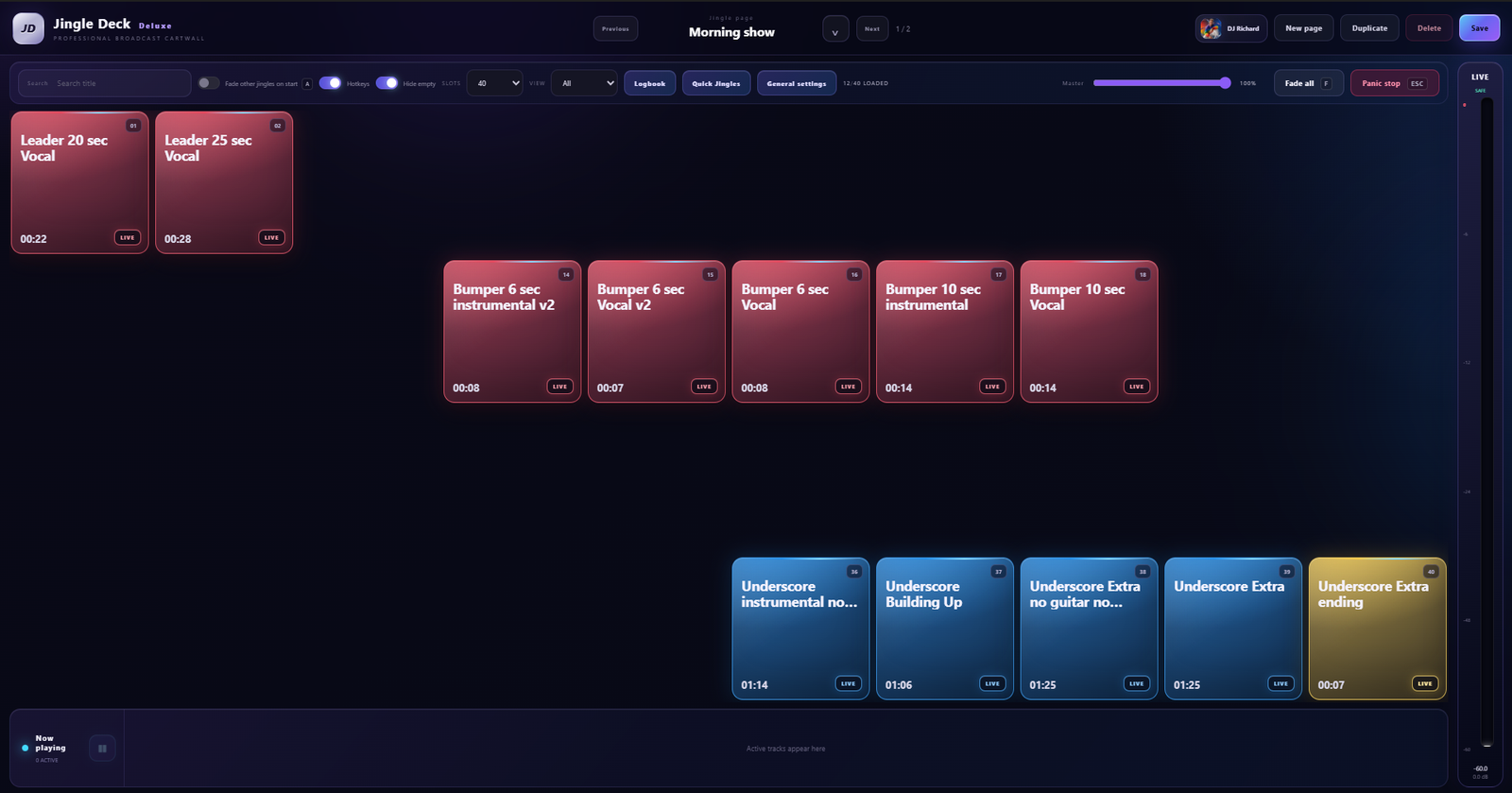
Professional experience as a DJ, producer and live-event operator made the missing pieces increasingly concrete: separate outputs, private preview, clear timing, musical beds that adapt to a presenter and an interface that remains readable under pressure. Radio and television added another practical issue: played audio should become a useful log rather than another reporting job afterwards.